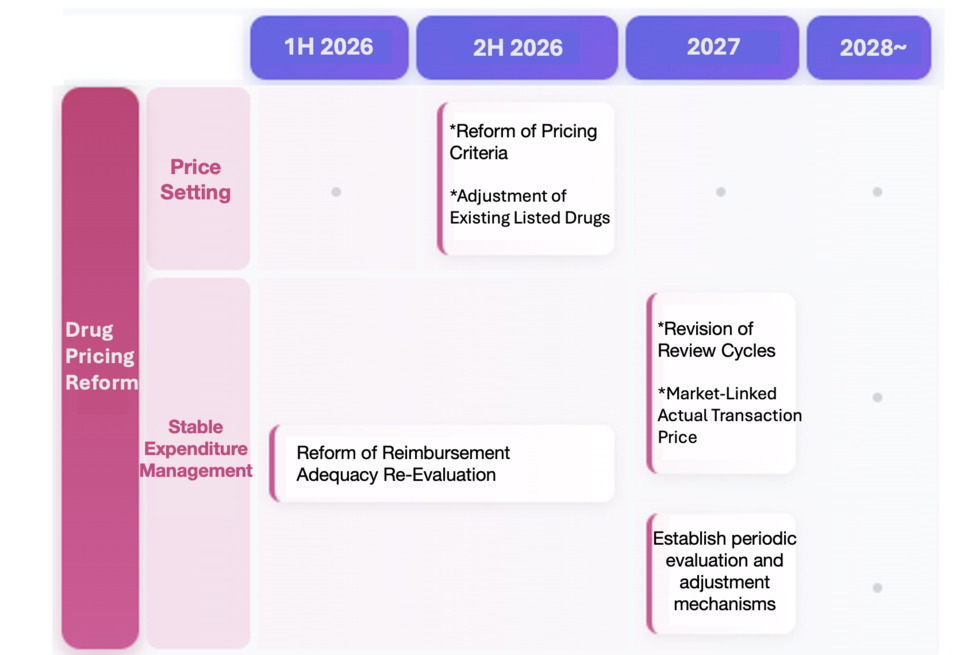

Reform lowers reimbursement rates, restructures the tiered price system, and reduces prices of 4,500 existing products over three years
The reimbursement rate for generic drugs will be reduced from 53.55% to the 40% range, and the current 20-step tiered pricing system will be simplified to 10 steps. The changes will take effect in July next year.
The adjustment aligns Korea’s generic pricing with major global markets. According to the Ministry of Health and Welfare (MOHW), the high reimbursement rate has encouraged Korean companies to focus on generics rather than innovation. Of the 240 new drugs listed over the past five years, only 13—or 5.4%—were developed in Korea.
Despite previous tiered reductions, the Ministry found that excessive generic entries and intensified non-price competition have led to unnecessary social and economic costs. Under the reform, the reimbursement level for generics and off-patent medicines will be reset to the 40% range. Requirements for independent bioequivalence studies and the use of registered APIs will remain, while the penalty for unmet criteria will be eased from an 85% to an 80% reduction.
Under the current tiered pricing structure applied from the 21st generic onward, price cuts are triggered when more than 10 products enter the market to prevent excessive competition at initial entry. After one year, all products are re-priced at the level of the 11th listed generic.
Currently, the 11th and later products in a formulation group are priced by subtracting 5 percentage points from the first generic’s reimbursement rate for each additional listing. For “innovative pharmaceutical companies,” the reduction is 3 percentage points. Going forward, from the 11th listing onward, prices for innovative and non-innovative companies will be calculated separately.
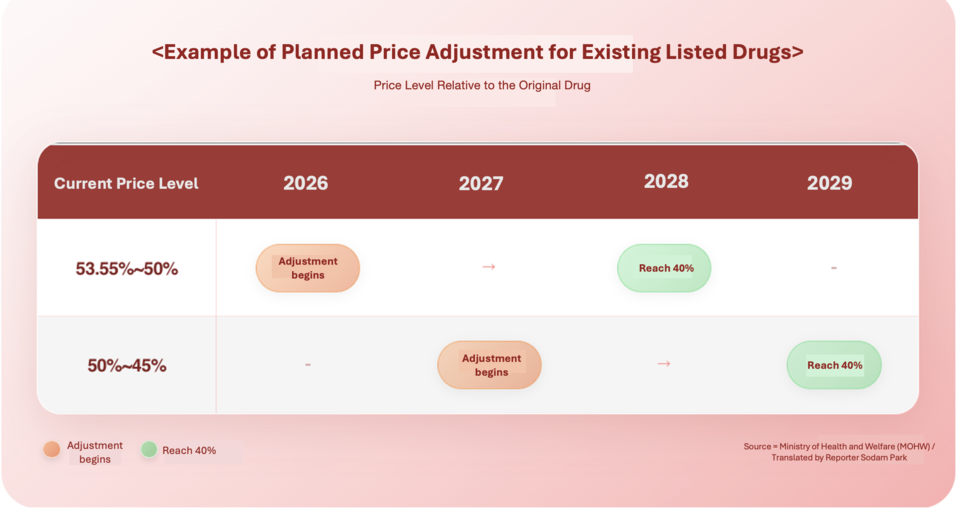
Existing Listed Drugs to Be Reduced to the 40% Range Over Three Years
To ensure consistency with the new rules for upcoming listings, the government will also reduce prices of already-listed products to the 40% range over a three-year period.
The policy targets drugs that have remained at their initial reimbursement level (53.55%) since the across-the-board cut in 2012. Approximately 3,000 products fall within the 53.55%–50% range and another 1,500 are in the 50%–45% range.
Certain categories will be exempt from reductions, including:
• Products currently receiving premium pricing (until the premium period ends)
• Market-stabilization, low-price, and orphan drugs
• Sole-source products
• Drugs with price increases in the past five years due to supply instability
• Basic IV solutions and radiopharmaceuticals
• Medical gases requiring stable supply (oxygen, nitrous oxide)
For all other products, stepwise reductions will be implemented by ingredient, considering each drug’s price relative to the reference amount and its initial listing date.