

Nobel laureate to support U.S. clinical strategy for Vascostem as company targets accelerated FDA pathway
Greg Semenza, Nobel laureate in Physiology or Medicine and professor at Johns Hopkins School of Medicine, has joined NatureCell America as a Scientific Advisor, a move expected to accelerate development of its investigational therapy for critical limb ischemia (CLI).
Semenza was awarded the 2019 Nobel Prize for his discovery of how cells adapt to hypoxia through the hypoxia-inducible factor (HIF) pathway, a key regulator of angiogenesis, metabolism, and cell survival.
In February 2026, he was appointed to advise on U.S. clinical development and regulatory strategy for “Vascostem CLI,” a cell therapy being developed by NatureCell’s U.S. subsidiary.
This marks a renewed collaboration between Semenza and NatureCell Chairman Jeong Chan Ra, who first worked together in 2008 on stem cell research in Maryland. Nearly two decades later, they have reunited to address CLI, a condition with limited treatment options.
HIT News met the two during their visit to Korea for the International Adult Stem Cell Symposium on March 24, where they discussed HIF biology, stem cell therapy synergy, and future development plans.
How did your collaboration begin?
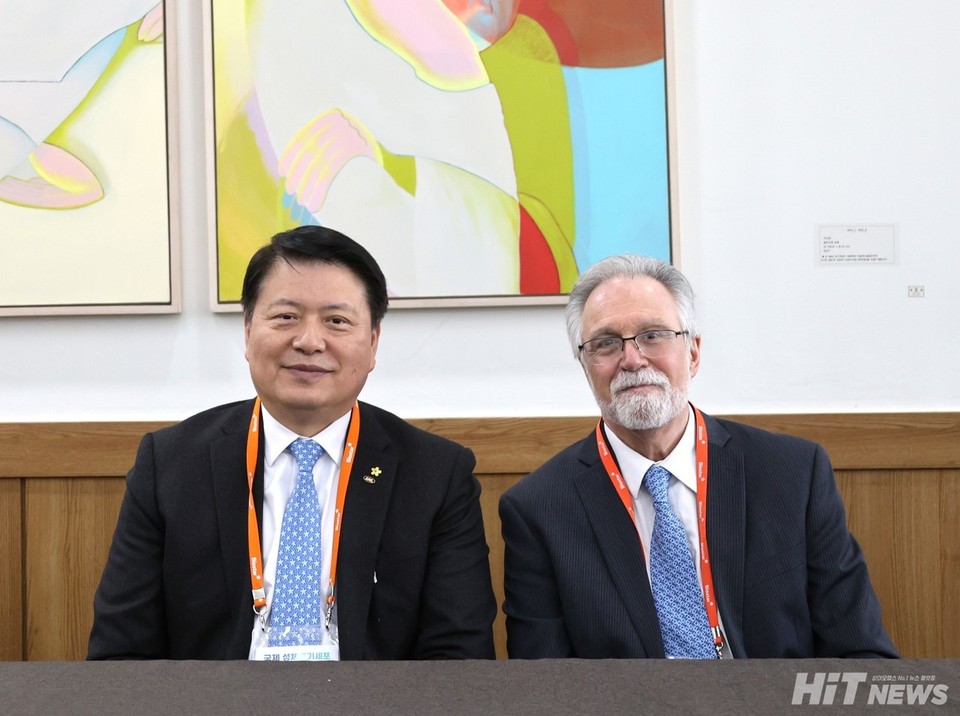
Jeong Chan Ra (hereafter “ Chairman Ra”):
“In 2007, when we established our Maryland office, I was introduced to Professor Semenza through the state government. At the time, I was studying adipose- and amniotic-derived stem cells, while he was focused on HIF-1. That relationship has continued to this stage, where we are approaching clinical development of VascoStem for CLI.”
Greg Semenza (hereafter “ Professor Semenza”):
“Our collaboration began through a shared interest in stem cell-based therapies, particularly for ischemic diseases. Chairman Ra supported research in my lab starting in 2008.”
What led you to accept the role of Scientific Advisor at NatureCell?
Professor Semenza:
“My decision to take on this advisory role was largely influenced by the global treatment landscape for critical limb ischemia (CLI) and the track record that NatureCell has built over the years. Currently, there are no approved cell or gene therapies for CLI. As a result, patients often chase rumors of so-called ‘miracle treatments,’ traveling from country to country. For someone facing the prospect of limb amputation, the desperation is immense—they will seek out any therapy that might help.
However, for any treatment to become a standard of care, it must be supported by robust scientific evidence and approved by the appropriate regulatory authorities. Naturally, this also requires clear proof of efficacy.
Ultimately, the key question is how to develop a therapy that works effectively. Cell therapies can be highly effective when they function properly, but that is not always the case. Therefore, identifying the right indication for a given therapy is critical. In this regard, NatureCell has long administered injection-based treatments for degenerative osteoarthritis and has accumulated substantial supporting data. I also believe the company has been making steady progress in advancing the U.S. development of its therapy, JointStem, which contributed to my decision to accept this role.”
HIF-1, the subject of your Nobel Prize–winning research and your presentation at this symposium, is relatively unfamiliar to many. What role does it play?
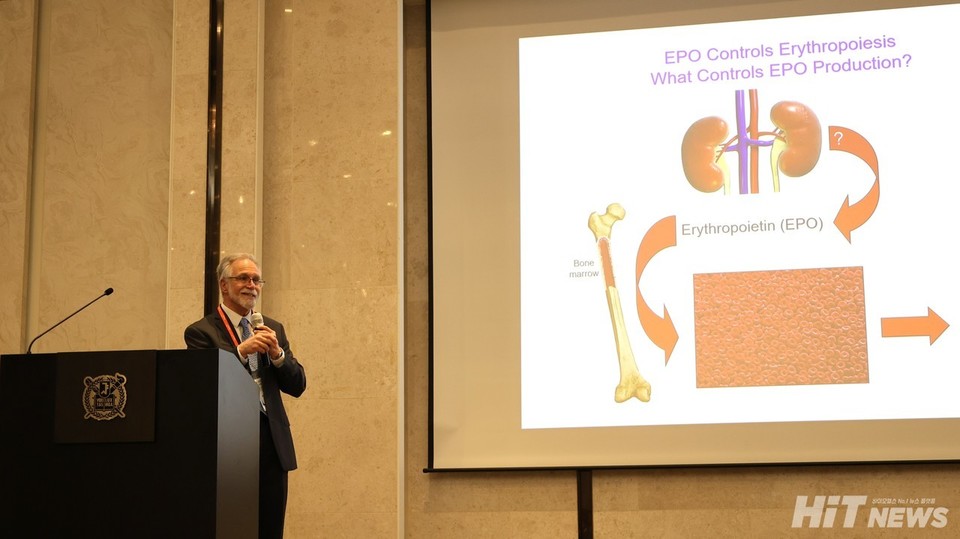
Professor Semenza:
“HIF-1 is a transcription factor that senses oxygen levels around cells and regulates gene expression. This protein essentially has two faces. In patients with ischemic diseases, HIF-1 does not function properly, and restoring its activity can promote blood vessel regeneration. On the other hand, cancer cells exploit this mechanism to survive in low-oxygen environments. In such cases, the goal is to block the HIF-1 response and effectively starve the cancer cells.”
How does the mechanism of HIF-1 improve stem cell therapy?
Professor Semenza:
“When cells are introduced into the body, the first thing they need to survive is a blood supply. If the injected cells fail to quickly secure access to circulation, they will soon die. Activation of HIF-1 strongly promotes the formation of new blood vessels. In other words, it helps establish a ‘survival infrastructure’ that allows the transplanted stem cells to persist longer and function more effectively within the body.”
What is VascoStem?
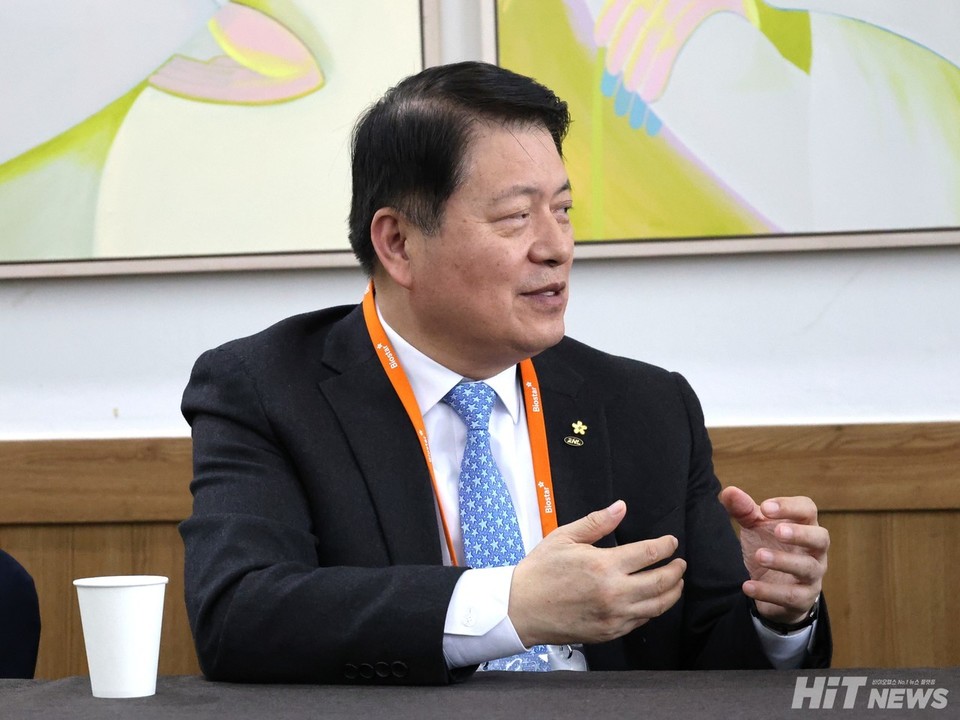
Chairman Ra:
“It is a therapy derived from a patient’s own adipose-derived stem cells, which are cultured into a more ‘youthful’ state using NatureCell’s proprietary technology. In elderly patients with critical limb ischemia—many of whom have chronic conditions such as diabetes, hypertension, or kidney disease—the cells themselves are often aged, resulting in reduced therapeutic efficacy. The key is to rejuvenate these cells.
Vascostem is administered through injections into both the patient’s muscles and veins to maximize blood vessel regeneration and wound healing, with the ultimate goal of preventing limb amputation.”
Can HIF-1 mechanisms help enhance VascoStem’s efficacy?
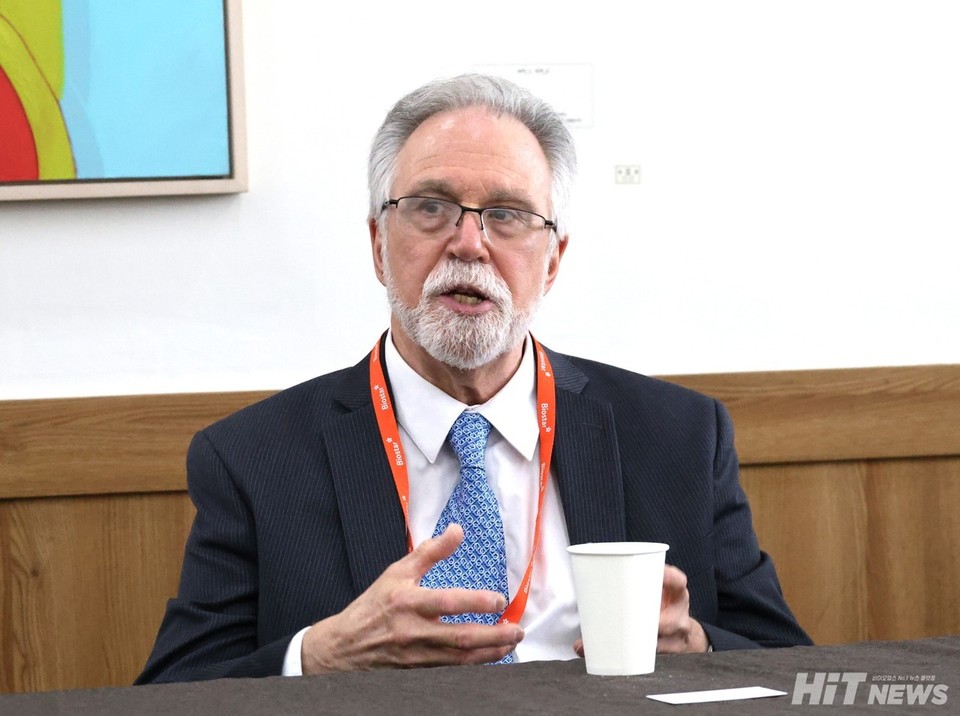
Professor Semenza:
“HIF inducers are small-molecule compounds that work by inhibiting hydroxylases. This allows them to be injected directly into the affected area, rather than requiring delivery through viral vectors. As a result, they can produce an effect equivalent to temporarily activating HIF.
This also helps generate a ‘homing signal’ that guides cells to their target location. In particular, when cell therapies are administered intravenously, this mechanism is expected to play a crucial role in ensuring that the cells migrate accurately to the diseased tissue.”
Given the proximity between Johns Hopkins University and the GMP facility in Baltimore, it seems likely that future research collaboration will become even closer. Will this collaboration expand further?
Professor Semenza:
“We plan to soon bring NatureCell’s materials into my laboratory and conduct research directly. We will systematically evaluate not only their standalone effects but also their potential synergy in combination with other drugs.”
Chairman Ra:
“In October 2026, the pilot GMP facility at the ‘Biostar Stem Cell Campus’ currently under construction in Baltimore will be completed. It is located just minutes away from Professor Semenza’s laboratory. While remote collaboration has advanced significantly, it cannot match the efficiency of in-person cooperation—sharing materials face-to-face and working together directly. Leveraging this geographic advantage, we aim to expand beyond degenerative osteoarthritis and ischemic diseases into oncology, ultimately saving more lives.”
What is the timeline for global clinical development and commercialization?
Chairman Ra:
“In the U.S., approximately 150,000 patients undergo amputation annually due to CLI, with high mortality within three years. Despite this, there are no effective treatments.
We are preparing for a Pre-IND meeting with the FDA and will determine whether to proceed with a Phase 2 trial or a combined Phase 1/2 study. We also plan to pursue RMAT designation for accelerated approval.
Our goal is to initiate clinical trials in the second half of this year and achieve commercialization within three to four years.”