

High-Cost Combination Therapy Calls for Partial Insurance Coverage
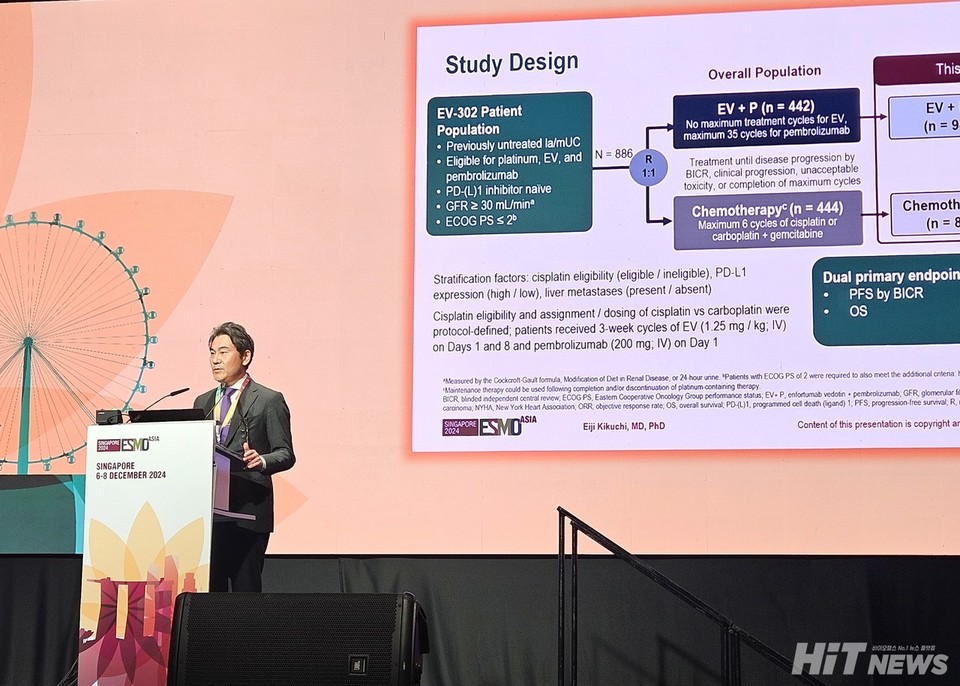
The combination therapy of Padcev (enfortumab vedotin) and Keytruda (pembrolizumab), which marks the first frontline treatment for metastatic urothelial carcinoma in 30 years, has shown positive outcomes in a sub-analysis of Asian patients. However, its high cost is expected to significantly limit its practical use until it gains insurance coverage.
At last year’s European Society for Medical Oncology (ESMO 2023) annual conference, the combination therapy received a standing ovation as the Phase 3 EV-302/KEYNOTE-A39 trial revealed a paradigm shift in first-line treatment for metastatic urothelial carcinoma, comparing Padcev + Keytruda with gemcitabine + platinum-based chemotherapy.
The study results showed that the median overall survival (OS) assessed by blinded independent central review (BICR) was 31.5 months (95% CI: 25.4-NR) for the Padcev group, nearly double that of the control group at 16.1 months (95% CI: 13.9-18.3). The therapy reduced the risk of death by 53% (HR=0.47, 95% CI: 0.38-0.58, p<0.00001).
Similarly, significant improvements were observed in the other primary endpoint, progression-free survival (PFS) assessed by BICR. The median PFS for the combination therapy was 12.5 months (95% CI: 10.4-16.6), approximately twice that of the chemotherapy group at 6.3 months (95% CI: 6.2-6.5). The therapy reduced the risk of disease progression or death by 55% (HR=0.45, 95% CI: 0.38-0.54, p<0.00001).
Based on these findings, Padcev received accelerated approval from the U.S. FDA in April last year, followed by full approval in December, and was approved by South Korea’s Ministry of Food and Drug Safety this July for the treatment of patients with unresectable locally advanced or metastatic urothelial carcinoma.
Meanwhile, at the European Society for Medical Oncology Asia (ESMO Asia 2024) conference held on December 7 in Singapore, additional benefits for OS and PFS were confirmed in the Asian sub-analysis of the EV-302/KEYNOTE-A39 trial. While such sub-analyses have limitations in generalizability, they provide supplementary evidence for countries that utilize this therapy, adding clinical significance.
HIT News interviewed Professor Jung-Min Cho from the Department of Hemato-Oncology at Ewha Womans University Mokdong Hospital on-site at ESMO Asia to discuss the results of the EV-302 Asian sub-analysis and its implications.
Could you share the key findings from the Asian sub-analysis?

at Ewha Womans University Mokdong Hospital
“The results of the EV-302/KEYNOTE-A39 Asian sub-analysis were consistent with the findings from the global patient population.
Key outcomes showed that the combination therapy of Keytruda + Padcev significantly reduced the risk of death by 66% compared to chemotherapy, demonstrating meaningful improvement in overall survival (HR 0.34, 95% CI: 0.18–0.65). The median progression-free survival (PFS) was also improved, with a 70% reduction in the risk of disease progression or death (HR 0.30, 95% CI: 0.19–0.48). The objective response rate (ORR) was more than doubled.
Specifically, the ORR was 72.2% in the combination therapy group compared to 35.0% in the chemotherapy group. While the higher response rates observed in the Asian group may be influenced by various factors and are difficult to generalize, the slightly improved outcomes in the 176 Asian patients are encouraging.”
What advantages does the Padcev combination therapy offer compared to chemotherapy?
“For the past 30 years, metastatic urothelial carcinoma patients have primarily been treated with platinum-based therapies like cisplatin or carboplatin. While the objective response rate (ORR) was relatively decent at around 50%, the duration of response was short, with cancer progression often occurring within 2–3 months. Unfortunately, there were no alternative options.
Chemotherapy, in particular, poses toxicity issues for organs like the kidneys and liver, making it unsuitable for repeated use in elderly patients or those with a high tumor burden.
In contrast, the Keytruda + Padcev combination therapy demonstrated positive responses across diverse patient groups, including those with liver metastases, impaired kidney function, and various histological subtypes. The duration of response (DoR) is longer, and the ORR is significantly higher, showing results superior to any first-line treatment to date.
Above all, the therapy nearly doubled overall survival, making it an unparalleled treatment option with exceptional outcomes in terms of therapeutic effectiveness.”
What notable adverse events have been observed with the Padcev combination therapy?
“The Padcev combination therapy exhibits a toxicity profile distinct from traditional chemotherapy. While hematologic adverse events are common in chemotherapy, Padcev is primarily associated with neuropathy and skin toxicity.
In particular, skin toxicity is observed in about 15% of patients during the early stages of treatment. This type of adverse event is not only unfamiliar to many healthcare providers but also requires caution, as severe cases can lead to fatal outcomes.
Additionally, early treatment may occasionally result in blood sugar regulation issues, while long-term use can lead to concerns such as neuropathy or pneumonia.
However, these adverse events can generally be managed by adjusting the Padcev dosage or temporarily discontinuing treatment before resuming. Importantly, the therapeutic response tends to be maintained even with these adjustments.”
Which patients are most likely to benefit from the Padcev combination therapy?
“The biggest hurdle for the Padcev combination therapy is its high cost, as both immune checkpoint inhibitors and antibody-drug conjugates (ADCs) are expensive treatments.
Given these factors, it may not be suitable for all patients but rather for those who are less likely to undergo subsequent treatments. For instance, patients with a high tumor burden or poor overall condition, where additional treatment options are limited, could find this therapy to be the best choice.”
How would you evaluate the Padcev combination therapy based on your clinical experience?
“Since its recent approval in Korea and the lack of insurance coverage, the number of prescriptions has been limited.
However, I have seen some remarkable outcomes in a few cases. Among patients with extensive liver metastases, there were 3–4 cases where the treatment achieved complete remission (CR). In one instance, the patient’s condition was so critical that survival would have been unlikely without the Padcev combination therapy, yet significant improvement was observed.
That said, managing previously unencountered skin toxicity issues has posed challenges in some cases.”
What is the most urgent issue to address for improving the treatment environment?
“Metastatic urothelial carcinoma is highly aggressive, yet treatment options remain extremely limited. Despite the significant improvements in OS and PFS demonstrated by this therapy, it is not being utilized due to cost issues.
There are many patients, not a small number, whose survival hinges on whether they can access this treatment. It is unfortunate that these issues remain unresolved due to financial barriers.
Given the high cost of using two expensive drugs, I understand that it may be a challenging decision for insurance authorities. However, if even one of these drugs could quickly receive insurance coverage, I believe it would greatly improve accessibility and allow more patients to hope for survival.”