
Until the End HIT Issue 8: Until the End HIT selects and introduces seven news stories that heated up the domestic pharmaceutical and bioindustry in 2023.
① ChongKunDang & Orum Therapeutics: Thawing Korea’s Biotech Freeze?

ChongKunDang and Orum Therapeutics have garnered commendation for breaking the biotech standstill through successful large-scale technology transfers. In November 2023, ChongKunDang inked a licensing agreement with Novartis for 'CKD510,' securing an $80 million upfront payment and a total contract sum of $1.35 billion. This agreement encompassed the transfer of development and commercialization rights for CKD-510 outside of Korea, a novel drug candidate utilizing the Non-Hydroxamic Acid (NHA) platform technology—an HDAC6 inhibitor developed by ChongKunDang's research and development (R&D).
Simultaneously, Orum Therapeutics entered into a technology transfer pact with Bristol Myers Squibb (BMS) for 'ORM-6151.' ORM-6151, an antibody-drug conjugate (ADC) pharmaceutical targeting GSPT1 protein degradation via an anti-CD33 antibody, received FDA approval for Phase 1 clinical trials in treating acute myeloid leukemia (AML) or high-risk myelodysplastic syndrome (MDS) patients. BMS agreed to pay Orum Therapeutics an upfront fee of $100 million for rights to ORM-6151, with potential additional payments reaching a maximum of $180 million, contingent upon meeting certain milestones.
Following the publication of 'Until the End HIT Issue 8,' LegoChem Biosciences finalized a technology export contract with Janssen Biotech, securing an initial payment of approximately $99.3 million and totaling $1.71 billion. This contract marked the largest-ever global technology export agreement by a South Korean company.
② Celltrion Group Nears Completion of Merger Process
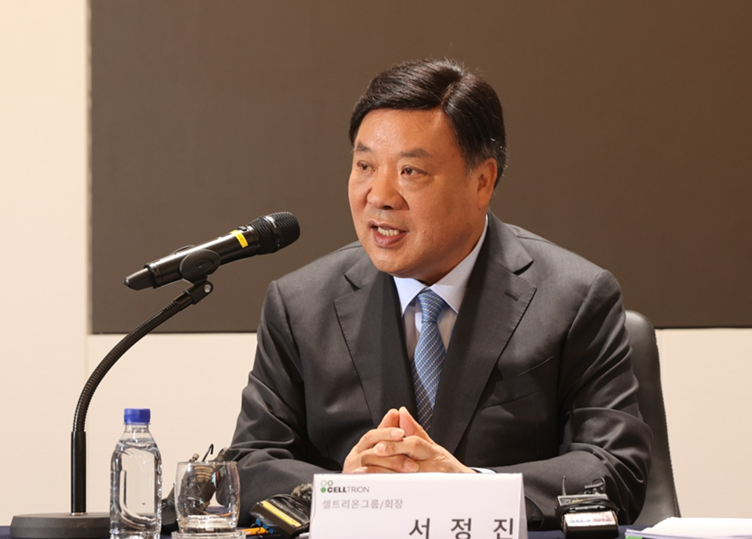
Celltrion Group has unveiled plans for its consolidation, starting with the merger of Celltrion and Celltrion Healthcare, followed by the integration of the unified entity with Celltrion Pharmaceutical.
In the initial merger, Celltrion will absorb Celltrion Healthcare, with a ratio of 0.4492620 shares of Celltrion common stock allocated for every one share of Celltrion Healthcare common stock. Despite concerns about the exercise price of stock acquisition rights, only 0.19% of the total opposing shares, considering the combined share counts of both companies, were exercised through subscription warrants. Consequently, Celltrion is poised to conclude the merger process with a new share listing scheduled for January 12, 2024.
③ Yuhan’s Leclaza Approved for 1st and 2nd Line Lung Cancer Treatment
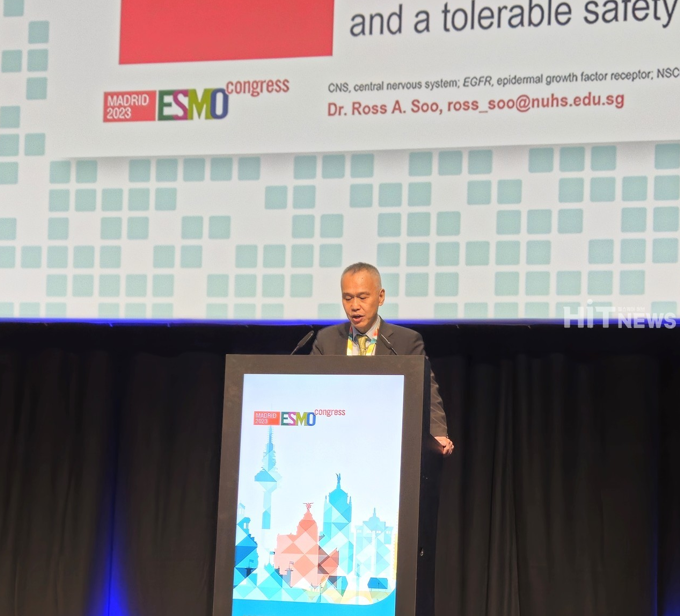
Yuhan Corporation's lung cancer drug, 'Leclaza (active ingredient: Lazertinib),' has gained approval as a first-line therapy for EGFR mutation-positive non-small cell lung cancer (NSCLC) patients and as a second-line treatment for those positive for EGFR T790M mutation.
At the European Society for Medical Oncology (ESMO) conference in Madrid, Spain, in October 2023, Yuhan Corporation presented data on a subgroup of brain metastasis patients from the 'LASER301' Phase 3 clinical trial. The analysis included 86 patients with brain metastases out of a total of 393 subjects. Among these, 45 received Leclaza, while 41 received Gefitinib (Iressa). The median intracranial progression-free survival (iPFS) for the Leclaza group was 28.2 months (95% CI: 14.8-28.2), significantly longer than the 8.4 months (95% CI: 6.7-NR) for the Gefitinib group, as per the company's data.
Professor Byung-Chul Ahn from the National Cancer Center's Lung Cancer Center highlighted the substantial efficacy demonstrated by Leclaza, emphasizing the 28.2 months median intracranial progression-free survival (miPFS) compared to 8.4 months for the control group receiving Zepotinib. He noted, "This suggests that the brain is no longer an untouchable area. In the past, brain metastases meant despair, but now it signifies that we can guide patients towards the possibility of treatment."
Additionally, Yuhan Corporation announced on December 11th that it has fulfilled all conditions for the approval of Leclaza as a second-line treatment for T790M mutation-positive NSCLC. Regulatory approval for the product change from the Ministry of Food and Drug Safety (MFDS) has been obtained, completing the approval process for the second-line treatment indication.
④ Korean Pharma Firms Start Workforce Cuts

Despite a 0.99% average uptick in employee numbers among the top 13 pharmaceutical companies between 2022 and 2023, there's a noticeable departure from the norm.
Ildong Pharmaceutical initiated restructuring in May 2023 due to R&D cost-related deficits. Over 20% of executives at Ildong Pharmaceutical and Ildong Holdings opted for voluntary retirement, with the remaining executives agreeing to a 20% salary reduction. YuYu Pharmaceutical scaled back its medical representative unit's operation within the sales division due to declining profitability since last August. Sales organization adjustments for pharmacies were completed in July, with external agencies set to fill sales gaps.
In November 2023, GC Biopharma introduced a voluntary retirement program, aiming to trim 10% of its workforce through restructuring and organizational consolidation. Employees with over 20 years of service are offered a year's salary, while those with less than 20 years can receive six months' salary.
⑤ Foreign Pharma Firms in Korea Undergo Strategic Business Shifts

Sandoz Korea initiated a restructuring of its Korean operations, transitioning from direct sales to third-party distribution effective from June 30th, 2023. The company will collaborate with Samil Pharmaceutical for the distribution of existing products.
Meanwhile, Novartis Korea, after closing its respiratory unit, is transferring select ophthalmic drugs to its Korean subsidiary. This strategic move focuses on innovative pharmaceuticals and involves nine ophthalmic products, including 'Patanol,' slated for sale through local partners next year. An early retirement program (ERP) has been announced for the ophthalmology unit handling existing glaucoma and allergy products.
Novartis Korea has transferred its respiratory product line to Teva-Handok and has completed reimbursement applications for high-cost drugs like 'Kymriah' and 'Zolgensma,' currently in use. 'Luxturna,' a genetic retinal disease (IRD) treatment, is close to reimbursement inclusion. Additionally, reimbursement criteria for 'Kisqali,' a breast cancer treatment, and 'Cosentyx,' an IL-17A inhibitor, have been expanded.
⑥ ‘Obesity’ as Key Focus for Pharma and Biotech Industries

The pharmaceutical and biotech industry, both domestically and internationally, has honed in on 'obesity' as a pivotal keyword, signaling intense interest. Companies like Hanmi Pharmaceutical (with Efgartigimod), LG Chem (LR19021), Hyundai Pharmaceutical (HD6277), Dong-A ST, Ildong Pharmaceutical, Yuhan Corporation, and others have entered the obesity treatment market.
In the biotech sector, entities like Peptron (PT404), ProGen, GI Biome, OliX (OLX702A), Inventage Bio (IVL3021), and Glaceum (HSG4112) are actively developing obesity treatment medications. Mirae Asset Securities' report projects the global obesity treatment market to reach $76.4 billion by 2030, with an annual growth rate of about 30%. Given drug therapy's current share of less than 3%, there exists significant unmet demand, underscoring the ongoing focus on obesity treatment development.
⑦Reassessment Result for Reimbursement Adequacy: Hyaluronic Acid Eye Drops Pending

Reimbursement decisions for 'Limaprost Alfadex' related to Buerger's disease and 'Loxoprofen' for sinusitis indications indicate non-reimbursability. However, the industry has initiated further review for hyaluronic acid eye drops' reimbursement criteria, sparking interest.
'Limaprost Alfadex' didn't secure reimbursement for addressing ischemic symptoms in Buerger's disease, retaining eligibility solely for improving self-reported symptoms and walking ability linked to acquired lumbar spinal stenosis.
'Loxoprofen Sodium' lacked reimbursement for acute sinusitis, yet its adequacy was acknowledged for various inflammatory conditions like rheumatoid arthritis, osteoarthritis, lumbago, shoulder periarthritis, and post-surgery pain.