

Phase 3 PALOMA-3 Study Shows Reduced Infusion-Related Reactions and Comparable Efficacy in EGFR-Mutated NSCLC
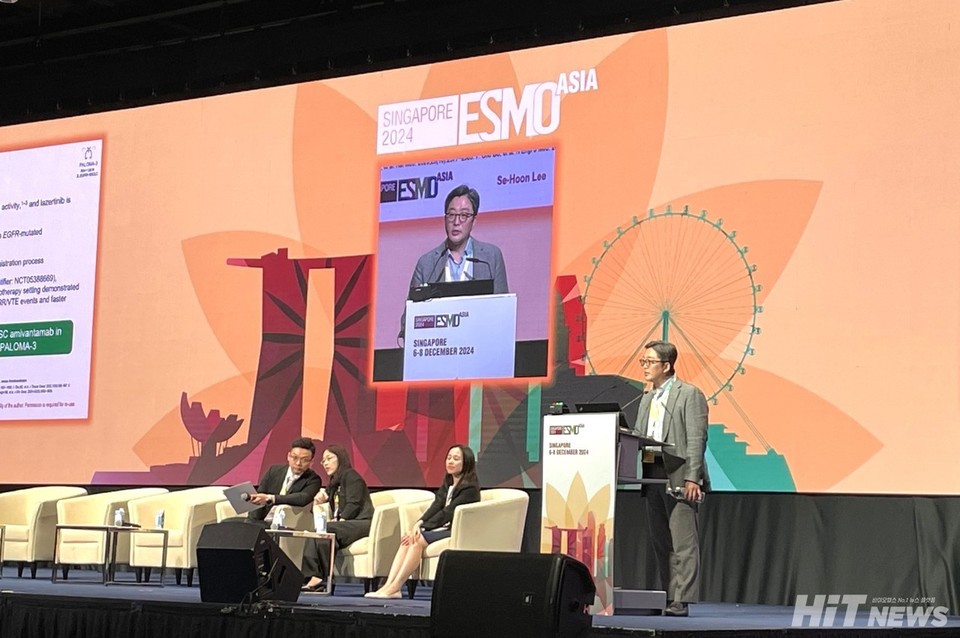
The Phase 3 clinical trial “PALOMA-3,” focusing on patients with EGFR-mutated non-small cell lung cancer (NSCLC) who had progressed following Tagrisso treatment, explored the efficacy and safety of subcutaneous (SC) and intravenous (IV) formulations of Rybrevant (amivantamab) in combination with Leclaza (lazertinib). The study’s Asian subgroup analysis, presented at ESMO Asia 2024, revealed notable benefits for the SC formulation, particularly in reducing infusion-related reactions (IRR) and venous thromboembolism (VTE).
PALOMA-3 aimed to demonstrate the non-inferiority of the SC formulation compared to the IV formulation as its primary endpoint, with secondary endpoints including objective response rate (ORR), duration of response (DoR), and safety. Earlier preliminary results were shared at ASCO in June, while the latest analysis presented findings specific to 126 Asian patients treated with the SC formulation and 129 with the IV formulation.
At a median follow-up of 6.9 months, the disease control rate (DCR) was 82.0% (95% CI: 72.1-86.7) in the SC group, compared to 72.9% (95% CI: 64.3-80.3) in the IV group (RR: 1.1, 95% CI: 0.96-1.27). Median DoR had not been reached in the SC group but stood at 7.1 months for the IV group. Progression-free survival (PFS) also remained unreached in the SC group, while it was 5.6 months in the IV group (HR: 0.84, p=0.35).
Although not statistically significant, the SC group demonstrated a trend toward improved outcomes. At 12 months, survival rates were 77% in the SC group and 61% in the IV group, though the median overall survival (OS) had not been reached for either group (HR: 0.60, 95% CI: 0.33-10.8).
A significant advantage of the SC formulation was observed in the incidence of IRR, which occurred in 61% of patients in the IV group but dropped to just 10% in the SC group—a sixfold reduction. For VTE, patients receiving prophylactic anticoagulants showed similar incidence rates (SC: 11%, IV: 12%), but among those not receiving anticoagulants, VTE rates were lower in the SC group (18%) than in the IV group (22%).
Professor Se-Hoon Lee of Samsung Medical Center, who presented the findings, remarked, “The Rybrevant SC combination therapy demonstrated additional efficacy benefits over the IV combination therapy in the Asian subgroup, mirroring the overall results. The marked reduction in IRR by about one-sixth and the significant decrease in VTE incidence in patients safely receiving prophylactic anticoagulants underscore the advantages of the SC formulation.”
The safety profile remained consistent across both the overall and Asian patient populations, further supporting the potential of the SC formulation as a more convenient and tolerable treatment option for EGFR-mutated NSCLC.
관련기사
- 렉라자+리브리반트SC, 주입반응·혈전증 개선 아시아 환자도 확인
- ESMO Asia 2024: Uniting Patients and the Industry Against Cancer
- ESMO ASIA 2024 개막… 공통분모 '암'으로 모인 산ㆍ학 ㆍ환자
- 개막 앞둔 ESMO ASIA, 올해 소개될 항암제 아시안 데이터는
- 피하주사(SC)의 강점, 정맥주사(IV)대비 편리함 때문일까?
- '리브리반트', 등장과 동시에 몸집 키운다
- Tagrisso+Chemotherapy Boosts PFS in Asian EGFR Lung Cancer Patients