

Ministry of Health Decision at 2024 7th Health Policy Meeting: Reduced Enhertu Breast Cancer Patient Medication Costs by Up to $3094
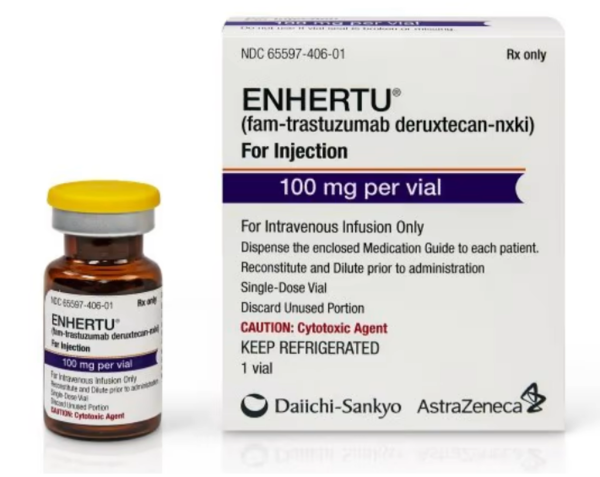
Starting next month, patients with metastatic breast cancer and stomach cancer will benefit from a new health insurance coverage for treatment with 'Enhertu', as announced by the Ministry of Health and Welfare (MOHW) on March 28th. This decision, made during the 7th meeting of the 2024 Health Insurance Policy Deliberation Committee, chaired by Vice Minister Min-Soo Park, includes revisions to the pharmaceutical benefits list and reimbursement caps. Additionally, blood clotting tests are transitioning to non-reimbursable status based on a suitability assessment.
Enhertu is now eligible for reimbursement for metastatic breast cancer and stomach cancer patients with prior treatment experience who are positive for human epidermal growth factor receptor 2 (HER2) expression. The reimbursement cap for this medication is set at $1061.93. Previously, patients with metastatic breast cancer positive for HER2 expression faced an annual medication cost of approximately $61,593 per person. With the new health insurance coverage, their financial burden will be reduced to around $3,094 (based on a 5% co-payment for breast cancer).
A MOHW official stated, "We plan to expand health insurance coverage from April 1st for the medications determined through the revision of the pharmaceutical benefits list and reimbursement caps notice."
Prior to this, from January to March, the MOHW expanded or newly included reimbursement criteria for 13 items. Effective January 1st, both 'Tagrisso' and ‘Leclaza’ for non-small cell lung cancer saw expanded reimbursement criteria, while ‘Braftovi Capsule' for gastric cancer treatment and 'Koselugo Capsule' for neurofibromatosis were newly included. Half of these, including 'Bosulif Tablets' for chronic myeloid leukemia and 'Zeposia Capsules' for ulcerative colitis, as well as 'Trimbow Inhaler' for asthma and chronic obstructive pulmonary disease, were applied for reimbursement in January.
In February, new inclusions comprised high-priced treatments such as 'Luxturna' for genetic retinal dystrophy, 'Kerendia Tablets' for diabetic chronic kidney disease, 'Zavicefta Injection' for multidrug-resistant bacteria, and 'Obizur Injection' for acquired hemophilia. Additionally, 'Trelegy Ellipta Inhaler' for asthma and 'Xospata Tablets (expanded criteria)' for acute myeloid leukemia have been applied for reimbursement starting this month.
Second Case: Blood Clotting Test Shifts to Non-Reimbursable
The Ministry of Health and Welfare (MOHW) has decided, following recent Committee deliberations, to transition blood clotting tests (scanning venography, platelet rotation method, relative viscometry) to non-reimbursable status. Initially included in selective coverage with an 80% patient co-payment rate, these tests were aimed at improving clinical outcomes by confirming blood viscosity for conditions such as hypercoagulability syndrome, as per a new medical technology assessment.
However, a medical technology reassessment by the Korea Institute of Health and Medical Research last year found insufficient clinical evidence supporting disease treatment and prognosis prediction, leading to a recommendation against their use. Despite medical validity, the therapeutic effectiveness of scanning venography, platelet rotation method, and relative viscometry remains uncertain, with unclear cost-effectiveness and low societal demand. Hence, based on co-payment determination criteria, they were deemed non-reimbursable.
This decision reflects discussions on the relatively low necessity for usage management and suitability assessment results. Consequently, the reimbursement status shifted from 80% patient co-payment to non-reimbursable. MOHW highlighted this as the second instance of transitioning from selective coverage to non-reimbursable status, following polyclonal B-cell fixed fiber-based blood perfusion therapy in April 2022. Despite being included in selective coverage since 2018, the transition was necessitated by persistent lack of sufficient evidence regarding its clinical utility.