

GSK’s Nucala seeks inclusion in RSA for severe eosinophilic asthma treatment.
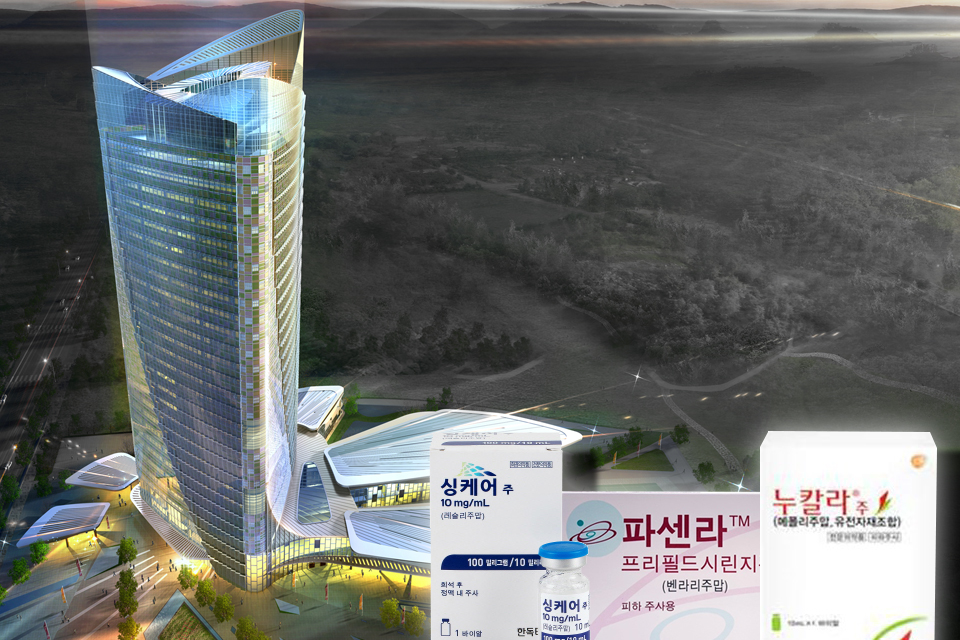
The process of reimbursing biological agents aimed at treating severe eosinophilic asthma is currently in progress. GlaxoSmithKline (GSK) is taking strides to secure coverage for their severe eosinophilic asthma treatment, 'Nucala' (active ingredient: Mepolizumab), by proposing a risk-sharing agreement (RSA). The industry's spotlight is on this RSA proposal due to its potential to broaden the eligibility criteria for RSA reimbursement.
On August 15th, industry sources revealed that Teva-Handok's 'Cinqair' (active ingredient: Reslizumab), an interleukin-5 (IL-5) inhibitor, has initiated discussions with the National Health Insurance Service (NHIS) for potential coverage. Meanwhile, GSK's 'Nucala,' another IL-5 inhibitor, has completed its economic evaluation and anticipates submission to the Drug Reimbursement Evaluation Committee next month.
A notable aspect is Nucala's ongoing reimbursement process via the RSA application. Given the relatively quicker progress of Cinqair, which has pursued a general inclusion track, the prospect of RSA approval for Nucala, arriving later in the game, might face challenges. However, given the undetermined status of Cinqair's reimbursement, concurrent advancement remains plausible.
The RSA application for Nucala aligns with the government's pioneering value-based reimbursement approach. Over the past six months, pharmaceutical industry representatives and government stakeholders have engaged in deliberations concerning 'innovative value-based reimbursement.' Within this context, the pharmaceutical sector proposed the expansion of RSA applications. The proposal entails the implementation of risk-sharing agreements for innovative drugs targeting conditions that significantly impact the quality of life.
Specifically, the proposal advocates expanding RSA application to encompass conditions meeting the criteria of introducing novel substances or mechanisms of action, lacking therapeutically equivalent alternatives, and causing substantial quality-of-life deterioration due to the chronic or irreversible nature of the disease. Conditions like systemic lupus erythematosus, progressive fibrosing interstitial lung disease, hereditary angioedema, and severe eosinophilic asthma have been proposed for inclusion.
Nucala's efficacy lies in its ability to enhance the quality of life by reducing reliance on oral corticosteroids (OCS), typically reserved as a last resort in treating severe asthma. According to the 2020 International Severe Asthma Registry (ISAR), South Korea's severe asthma patients have a staggering 92.9% continuous OCS usage rate, surpassing rates in other nations like the United States (20%).
In indirect comparative studies (ITC) involving IL-5 inhibitors, Nucala exhibited a 34-45% improvement in asthma exacerbation compared to AstraZeneca's IL-5 inhibitor 'Fasenra' (active ingredient: Benralizumab), alongside enhancements in asthma symptom control (ACQ). Further, the SIRIUS clinical trial, focusing on OCS dosage reduction, revealed Nucala's potential to cut OCS usage by up to 50% after 20-24 weeks of treatment.
The long-term COSMEX observational study, conducted over a span of up to 4.8 years, consistently demonstrated the safety profile of Nucala in terms of reducing asthma exacerbations and diminishing OCS usage. Additionally, the REALTI-A study, a global real-world evidence (RWE) investigation across 84 centers, highlighted a remarkable 71% reduction in asthma exacerbations and a 75% decrease in OCS usage after one year of Nucala treatment.
The European Academy of Allergy and Clinical Immunology (EAACI) guidelines offer strong recommendations for Nucala, a sentiment echoed by the Korean Academy of Asthma, Allergy and Clinical Immunology (AAIR), acknowledging the drug's proven efficacy in curbing OCS usage.